Nutrition Episodes

153
Sept. 10, 2026
153: Pasture-Raised Chicken Is Mostly Nonsense | With Chester Bidmead
When you pay a premium for pasture raised chicken or pasture raised pork at the store, you're probably not getting what you think you're getting. Chickens and pigs are monogastric animals — they have one stomach and no rumen, which means they can't ferment grass the way a cow can. Chickens descend from jungle fowl and pigs are woodland animals, so the image of birds on open green pasture has more to do with marketing than with biology. Whatever you feed a monogastric goes straight into its meat....
Guest: Chester Bidmead
150
Aug. 20, 2026
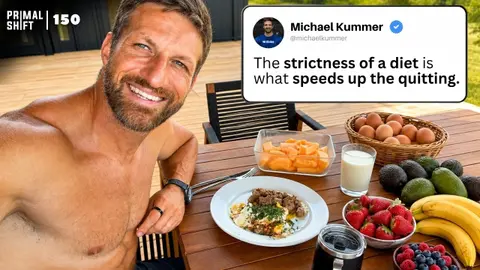
150: Animal-Based Diet Results After 5 Years: I Finally Stopped Dieting
Carnivore was the eye-opener that showed me how to eliminate anything that could be bothering me, but five years later, animal-based is the framework that actually stuck. I've gone through paleo, keto, and carnivore, and none of them were failed attempts; each one raised the baseline and taught me something I still use today. In this episode, I break down the three things that actually changed (not my weight, not a number on a chart), why animal-based has outlasted every stricter diet I've trie...
143
June 23, 2026
143: I Stopped Eating by the Clock. Here's What Happened
Most of us eat by the clock, not by hunger. In this episode, I break down the difference between real physiological hunger and the cravings, habits, and schedules that drive most of our eating decisions — and why that distinction matters more than any diet. I share what happened when I skipped breakfast before a photo shoot in Miami, how ghrelin trains itself to your schedule, and why fasting for a day might be the simplest recalibration tool you're not using. If you can't skip a meal with...
142
June 16, 2026
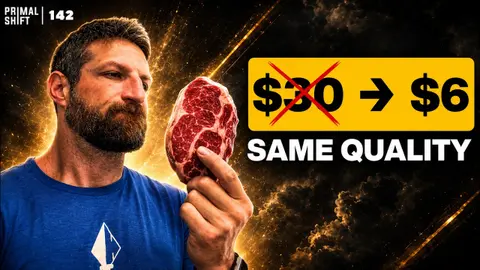
142: You Don't Need Expensive Meat to Eat Well
Most people hear "buy the best meat you can afford" and immediately picture the $30 pasture-raised ribeye at Whole Foods — and then conclude that eating well is simply out of reach. But that's not a fair test of what quality meat actually costs. Ribeye is the most expensive cut at the highest tier, and comparing it to cheap conventional ground beef is like comparing a BMW to a used Corolla and deciding all cars are unaffordable. The more useful question is what "good enough" looks like across...

141
June 9, 2026
141: The Protein Mistake That's Costing You Muscle
Most people treat the recommended daily protein intake as a target. It's not; it's the bare minimum to avoid getting sick, and I've been eating well above it for years without gaining fat or damaging my kidneys. In this episode, I break down how much protein you actually need per day, why protein timing for muscle matters less than how you dose it, and the one variable almost nobody talks about: the leucine threshold. Hit it per meal and you trigger muscle protein synthesis. Miss it and nothi...

138
May 13, 2026
138: Why Eating Cheap Is the Worst Financial Decision
The main argument I hear when I encourage people to improve their diet is that healthy food is expensive. Compare the cost of a pound of grass-finished beef to fast food and the difference looks stark. But cheap food is the most expensive thing you'll ever buy. In the 1960s, the average American spent about 17% of their income on food. Today it's 10%, the lowest of any country on earth. Over roughly the same period, healthcare spending went from 9% of the economy to 18%. Food got cheaper and ...
137
May 6, 2026
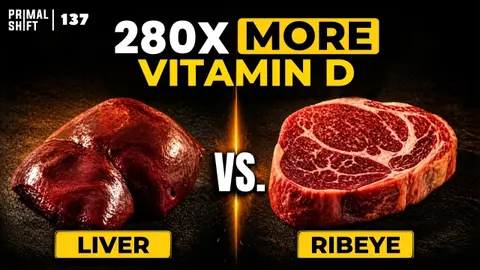
137: The Nutrient Gap Most Carnivores Don't Know About
Why bother with organ meat when you can just have a ribeye? After all, steak is already one of the most nutrient-dense foods on the planet. It's a fair question, and one I get all the time. The ancestral health world has generally answered it with "because our ancestors did" or "because predators eat the organs first," and while those things are true, they don't actually tell you what you need to know. The real question is how much more nutritious is an organ than a steak. Is it 10% more? ...
135
April 21, 2026
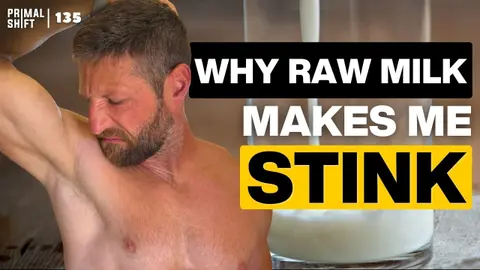
135: The Milk Problem Nobody Talks About
I noticed something weird: body odor after drinking milk, but no digestive issues. That 48–72 hour delay told me lactose wasn't the culprit. In this episode, I explore why raw milk health benefits get oversimplified, and why the real differences matter: A2A2 milk vs A1 casein, how pasteurized milk inflammation compares to raw, and what my grass fed dairy microbiome response actually means. I break down: Why raw milk body odor happens (and what the timing reveals) Milk digestion ...
133
April 7, 2026
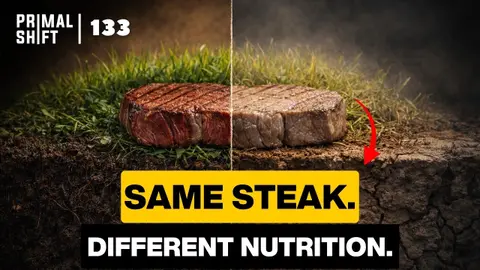
133: Your Food Isn't as Nutritious as You Think
Your food can only be as nutrient dense as the soil it was grown in. That's the realization I had after testing the soil across our new property and discovering that despite being relatively fertile and rich in magnesium, it was far too acidic for plants to absorb those minerals properly. Soil pH is a gatekeeper: if it's off, the nutrients stay locked in the ground even when they're technically present. That sent me down a rabbit hole of soil depletion and food nutrient density, and the da...
131
March 17, 2026
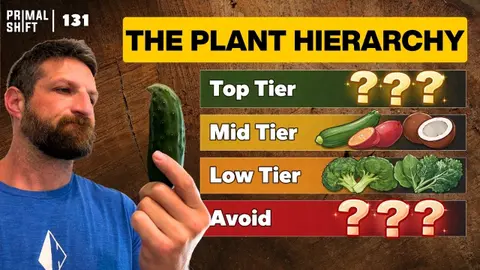
131: The Best and Worst Plants to Eat on an Animal-Based Diet (And How to Prepare Them)
Most people who start an animal-based diet assume the goal is to eliminate every plant from the plate. I get it: when you've spent years being told kale is a superfood and you finally learn it's loaded with oxalates and goitrogens, the pendulum swings hard. It did for me. But the blanket "plants are bad" framing leaves a lot on the table. Plants aren't health foods. They don't want to be eaten, and they evolved with chemical defenses to discourage exactly that. Our dietary foundation at the K...
130
March 10, 2026
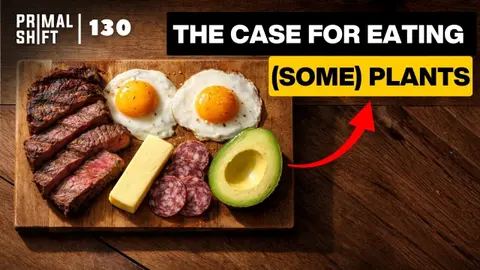
130: What Role Should Plants Play In An Animal-Based Lifestyle?
All plants are toxic to varying degrees. I haven't changed my mind on that. But recently our oldest daughter came up with a business idea: – making salves from plantain leaves infused in beeswax and olive oil for their antibacterial properties — and it got me thinking about the role plants actually play in our household despite the fact that we're very much an animal-based, meat-centric family. The truth is, we do eat plants. We always have. The foundation hasn't changed — meat, organs, eggs,...
127
Feb. 11, 2026
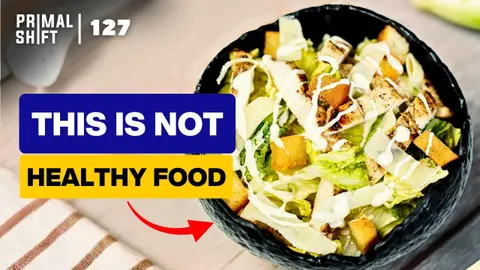
127: Why “Healthy” Restaurant Meals Quietly Backfire
Most people assume they're eating well when they go out by choosing the "right" food categories: eggs instead of pancakes, salmon instead of a burger, salad instead of fries. But once food leaves your kitchen, categories matter far less than sourcing, fats and preparation. Restaurants are optimized for speed, consistency and profit. That usually means seed oils are used for cooking, sauces and dressings; that produce isn't organic; that poultry is low quality; and that most seafood is farmed....
126
Feb. 4, 2026
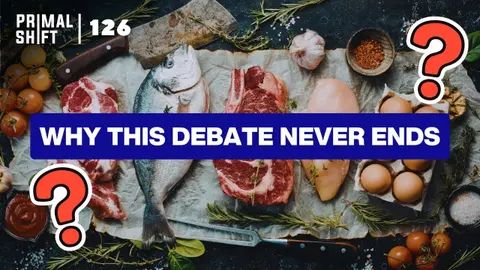
126: The Nutrition Question Almost Everyone Gets Wrong!
Most nutrition debates revolve around the wrong questions: Should we eat vegetables or not? Grains or no grains? Animal-based or plant-based? But as I discuss in this episode, framing nutrition solely by food categories overlooks the single most crucial factor: food quality. Modern debates often miss that eggs aren't simply eggs, grains aren't just grains, and vegetables aren't uniformly nutritious. The way food is grown, raised, processed, and prepared makes an enormous difference — far grea...
125
Jan. 28, 2026
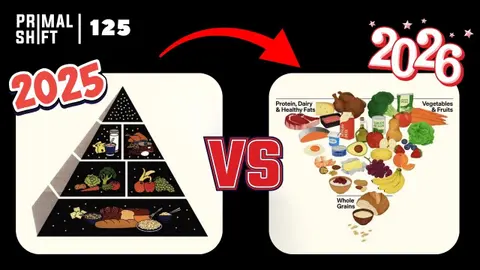
125: The New Food Pyramid 2026 Looks Better… But It’s Still Not Good Enough
Every five years, the U.S. dietary guidelines get updated. Usually, that update triggers some mix of frustration, disbelief and déjà vu. This time was different… not because the guidelines suddenly got human nutrition right, but because they moved slightly closer to reality. There’s finally more emphasis on whole foods and less on ultra-processed junk. The old grain-heavy food pyramid has effectively been flipped. That alone is meaningful progress. If someone followed these guidelines instead...
121
Dec. 17, 2025
121: The Hidden Contaminant in Even the Best Meat
You can do everything right on paper — organic, grass-fed, pasture-raised, regenerative — and still end up eating the very compounds you were trying to avoid. That’s the blind spot I’m digging into in this episode: the ways food gets contaminated during processing and packaging… often without the consumer noticing, and without small farmers even realizing they’re doing it. The most vivid example is something most people would never question: A turkey can be raised well, harvested cleanly, ...
116
Nov. 12, 2025
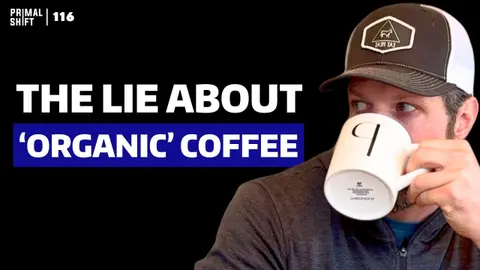
116: Why Most Coffee Is Slowly Destroying Your Health…
Coffee can be both a tool and a toxin, depending on how it’s grown, prepared and used. In this episode, I take a closer look at caffeine and coffee through a practical lens — what science says, what I’ve experienced, and what really determines whether that morning cup helps or harms you. Caffeine blocks adenosine, which makes you feel less tired and can improve focus and performance. I’ve noticed that benefit myself when coffee happens to precede a workout, though I’ve also learned the hard w...
114
Oct. 28, 2025
114: The Dirty Secret in Protein Powders – What Consumer Reports Found!
When Consumer Reports recently claimed that protein powders contain "high levels of lead," it sparked fear and confusion. In this episode, I break down what's actually going on, including how heavy metals end up in supplements, which types are most affected, and how to protect yourself without overreacting. Plant-based protein powders like rice, pea, soy and hemp often have the highest levels of contamination. These crops naturally absorb metals like arsenic, lead and cadmium from soil and wa...
111
Oct. 7, 2025
111: A Future Where We Can Eat At McDonald’s
A few weeks ago, I found myself driving home late after a long day of hauling gear to our new property — hungry, tired, and joking with Kathy that if we were a “normal” family, we’d just pull into a McDonald’s drive-thru. Of course, we didn’t, but that comment stuck with me. Could there be a future where eating at McDonald’s wouldn’t feel like poisoning your body? It sounds absurd, but after hearing that McDonald’s plans to invest $200 million into regenerative agriculture, I’m not so sure anymo...

108
Sept. 9, 2025
108: Europe vs. America: The Health Secret Nobody Talks About
I recently spent a week in Austria, bouncing between my grandparents’ farmhouse and the alpine trails I grew up on. And it hit me how stark the contrast is between the foundation they built and the environment kids are growing up in today. My grandparents are 92 and 93, still living on their own. They had decades of clean food, pure alpine water, long days outside and zero WiFi. And then, over the last 10-20 years, an Americanized creep of seed oils, ultra-processed snacks and glyphosate star...

106
Aug. 26, 2025
106: Why Eating Like Your Grandparents Won’t Save You
In this episode, I explore whether following an ancestral diet and traditional eating habits is enough to keep us healthy today. While our grandparents thrived on simple meals, the reality of modern food quality, hidden environmental toxins, and processed foods inflammation paint a different picture. I share how chronic stress and health challenges, along with changes like A1 vs A2 milk casein, affect our bodies in ways past generations didn’t face. We’ll look at why homesteading health problems...

105
Aug. 19, 2025
105: The Anti-Fatigue Factor in Liver Nobody Can Explain
In this episode, I share a fascinating 1950s endurance experiment with rats that uncovered what researchers called an “anti-fatigue factor” in beef liver. The results highlight why organ meats like liver are nature’s ultimate multivitamin and how even small micronutrient deficiencies can wreck ATP energy production, mitochondrial health, and overall performance. I’ll walk you through what the study revealed, how it ties into modern fatigue and performance issues, and why I believe high-quality ...
104
Aug. 12, 2025
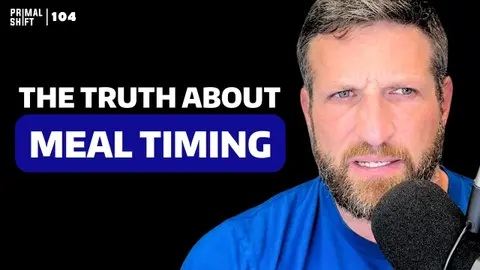
104: Why I Switched from 2 Meals to 3 a Day
For years I thrived on two large meals a day – a late-morning breakfast after training and an early dinner. And the results spoke for themselves: stable blood sugar, excellent insulin sensitivity, low body fat, and plenty of energy. But I began noticing a drawback. Those evening meals, heavy in protein and fat, kept my digestive system working for hours after I went to bed, raising my heart rate, lowering my HRV, and occasionally causing acid reflux. Shifting dinner earlier didn’t help much, ...

99
July 1, 2025
99: Plants vs Animals: Why Meat Beats Plants for Nutrition
For most of human history, survival depended on eating the foods that gave us the most nutrients with the least effort. That usually meant animals, which are dense in protein, fat, and bioavailable vitamins and minerals. But in recent years, we’ve been told that plants are the true superfoods. Raw kale in your smoothie? Spinach salads every day? The darker and leafier, the better, right? Not quite. In this episode, I dive into the real story behind plant-based foods and the antinutrients t...

96
June 4, 2025
96: Is Sourdough Bread Actually Healthy?
Have you noticed how everyone seems obsessed with sourdough bread lately? Well, my wife and I have been experimenting with sourdough baking for a couple of years now, and in this episode, I'm breaking down the real story behind sourdough. Is it truly healthier, or is that just hype? I'll walk you through why sourdough might digest easier, how it impacts nutrient absorption, and what types of flour you should (and shouldn't!) use. Plus, I’ll share our personal experiences, what works for...