

 Apple Podcasts
 Spotify
 Castro
 RSS Feed
 148: My Testosterone Is 312… Here's What Happened to My Body!
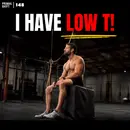
My testosterone is 312 ng/dL. By most standards, that's low. But instead of panicking, I sat down and asked myself a simple question: is it actually a problem?
In this episode, I walk through my own testosterone journey from TRT and hCG to where I've landed today, and why I'm not rushing to fix a number just because it's low. I look at the tradeoffs I've noticed between higher and lower T: appetite, libido, resting heart rate, HRV, even risk-taking. I also lay out the honest self-assessment I think everyone should run before reaching for a prescription: are your energy, strength, body composition, and drive actually suffering, or are you just reacting to a lab result?
This isn't a case against TRT. It's a case for knowing why you're doing it before you start.
Thank you to this episode’s sponsor, Peluva!
Peluva makes minimalist shoes to support optimal foot, back and joint health. I started wearing Peluvas several months ago, and I haven’t worn regular shoes since. I encourage you to consider trading your sneakers or training shoes for a pair of Peluvas, and then watch the health of your feet and lower back improve while reducing your risk of injury.
To learn more about why I love Peluva barefoot shoes, check out my in-depth review: https://michaelkummer.com/health/peluva-review/
And use code MICHAEL to get 10% off your first pair: https://michaelkummer.com/go/peluva
Learn More:
32: Testosterone Replacement Therapy: The One Downside Nobody Talks About: https://www.primalshiftpodcast.com/32-testosterone-replacement-therapy-the-one-downside-nobody-talks-about/
65: Why Testosterone Affects Your Drive to Do Hard Things: https://www.primalshiftpodcast.com/65-why-testosterone-affects-your-drive-to-do-hard-things/
83: Understanding Testosterone Production: https://www.primalshiftpodcast.com/83-understanding-testosterone-production/
In this episode:
00:00 Intro
00:53 TRT journey and exit
02:27 Do symptoms even matter
03:51 Honest self-assessment
05:41 High T tradeoffs
06:52 Heart metrics and HRV
08:03 Risk taking and aging
10:03 Lifestyle limits and costs
12:48 Genetics and final thoughts
Find me on social media for more health and wellness content:
-
Website: https://michaelkummer.com/
-
Pinterest: https://www.pinterest.com/michaelkummer/
-
Twitter/X: https://twitter.com/mkummer82
[Medical Disclaimer]
The information shared on this video is for educational purposes only, is not a substitute for the advice of medical doctors or registered dietitians (which I am not) and should not be used to prevent, diagnose, or treat any condition. Consult with a physician before starting a fitness regimen, adding supplements to your diet, or making other changes that may affect your medications, treatment plan, or overall health.
[Affiliate Disclaimer]
I earn affiliate commissions from some of the brands and products I review on this channel. While that doesn't change my editorial integrity, it helps make this channel happen. If you’d like to support me, please use my affiliate links or discount code.
My total testosterone is 312 nanogram per deciliter. That's not high. I would argue that's low. Now, before we go into the details, I would like to hear from you, what are your testosterone levels, and do you think they are high, they are low? Are you doing something about that? Let me know in the comments.
If you're watching this on a platform supporting comments, I'd like to hear from you. Welcome to the Primal Shift Podcast. You know, I thought about this the other day, and I'm like, "Is that too low? Do I need to do something about it?" And then I thought about all of the things that I am doing. You know, I'm out in the sun.
I mean, right now it's cloudy, but you get the point. I sleep well. I eat well. I eat enough fat. I exercise. I lift heavy things. I try to manage my stress. I do all of those things, and yes, my testosterone is low. Hmm. And that's actually one of the reasons why maybe five years ago when I began working with a longevity doctor who recommended doing testosterone replacement therapy, I decided to go, to be on board with that and I try it out, right?
And so I began my journey on TRT, testosterone replacement therapy, together with hCG in the attempt to keep my body producing testosterone so to not shut off, you know, my own production completely, and it worked really well. I mean, my testosterone levels at the peak were around 1,800 nanograms per deciliter, way more than I ever needed, which is the reason why I kept reducing the amount and reducing and reducing and reducing until I completely cut out testosterone completely because I realized I don't wanna block my body's own production permanently despite the hCG.
Who knows? Maybe that will never recover, and then I'm on the needle for the rest of my life. I don't wanna do that. And so I stopped doing TRT, um, about three or so years ago, and I continued with hCG to encourage my testes to produce a little bit more testosterone, and I ended up with levels of around 800 or so.
You know, 650 to 800, which was right in the sweet spot. I mean, I'm 44 years old now, and I figured those are probably somewhat optimal levels even though, I mean, who knows what's optimal? Just considering the broad range of 300 to 1,000, which is the normal range. Who knows what's optimal? I just figured higher is probably better than lower.
But then this morning I read an article about, you know, somewhere in a, in a major news outlet about, you know, what you can do to naturally improve your testosterone. You know, like, all the lifestyle choices that I've been doing for a, for a long, long time. And I'm like, what is really... what is the downside of having low testosterone?
Because none of the traditional factors, you know, low libido, low energy levels, high body fat, uh, weakness, uh, no drive. You know, all of that don't apply to me, you know? I'm... I mean, yes, while I was on testosterone, I maybe retained a little bit more water. I might have looked a little puffier maybe. Sure. Uh, but I mean, I, I'm fine with the physique that I have at, with low testosterone, right?
And I don't even work out a lot. I mean, that's the other thing. If I were w- if I were to lift weights three times, four times a week, you know, I would look significantly different. You know, la- I worked out last time yesterday, and then the time before it was a month ago. So I'm not in the gym all the time.
I just, you know, try to stay active and lift feed bags and, you know, work on the farm and stuff, and that's how I maintain what I have. But my body fat percentage is between 8 and 12%. My strength is there. I feel strong. I feel driven. I'm energetic all day. I sleep well. So I'm like, is it really a problem to have low testosterone?
And I guess there is such a thing as having too low of a, you know, of certain hormones. Completely agree with that. But I also think that you, in order for you to make the decision whether or not you should be doing anything to fix your levels, to improve your levels, to raise your levels, is to take honest inventory of what is going on.
You know, how are your energy levels? How is your libido? How is your strength? How is your body fat? You know, how do you perform in the gym? How quickly do you recover? You know, a lot of things that are typically... that might be impacted negatively when you have low testosterone. You wanna, you wanna assess honestly and say, "Okay, you know what?
You know, I'm, I'm... my body fat is not where it should be. I try to work out, but, you know, I'm not growing any muscle tissue." And, you know, there, there might be reasons. But in my case, I'm like, I don't, I do not think it's worthwhile using pharmaceuticals in whatever shape or form to increase levels that do not appear to be negatively impacting Me, my physique, my, you know, mentally, none of that.
Now, I will say one thing... We have to interrupt this episode for an important message from your feet.
Thank you to this episode’s sponsor, Peluva!
Peluva makes minimalist shoes to support optimal foot, back and joint health. I started wearing Peluvas several months ago, and I haven’t worn regular shoes since. I encourage you to consider trading your sneakers or training shoes for a pair of Peluvas, and then watch the health of your feet and lower back improve while reducing your risk of injury.
To learn more about why I love Peluva barefoot shoes, check out my in-depth review: https://michaelkummer.com/health/peluva-review/
And use code MICHAEL to get 10% off your first pair: https://michaelkummer.com/go/peluva
And now back to the episode... With higher levels of testosterone, I eat significantly more. I eat like there is no tomorrow. And I, I also tend to overeat a lot. Now, good stuff, protein, you know, animal fats and those kind of things, not, not, not donuts.
But I've, I've, I've noticed that our food bill is significantly higher, or it correlates with my testosterone levels, right? My libido, I also... I think my libido is, is fine the way it is. I, I think that it's a... I like the way it is. You know, not to, you know, go into too much, uh, detail here that you might not wanna hear, but, you know, I think about sex a few times a day.
When my levels are really high, I feel like I think about sex all the time. I don't know that that's necessarily natural or optimal because I'm a- also in an age where I don't wanna have kids anymore. You know, I mean, obviously my biology doesn't necessarily know that. Uh, but nonetheless, you know, I, I feel like it was a little bit maybe too much, and certainly my wife thinks that way.
Now I think I'm at a place where I'm like, "Okay, this is how I, I would like it. This is how, you know, she likes it as well My resting heart rate is much lower with lower testosterone levels, and by about 10 points or beats per minute. Now, you know, overnight my resting heart rate is about in the low 40s, you know, low to mid-40s.
With tes- with higher levels of testosterone, it's about in the low 50s to mid-50s, so about 10 points higher. Now, whether or not this is good or bad, I don't know, but I can tell my, my heart is working harder, you know, to, I don't know, maintain, build, I don't know what it, what it does. My HRV is also higher now that my testosterone levels are lower than when my levels are higher.
So there is this inverse correlation of testosterone, HRV, and testosterone, direct correlation, resting heart rate. So again, I don't know that it necessarily says anything about my level of fitness. I don't think I'm any less fit when I have higher T levels, which, you know, if you just look at HRV and, and resting heart rate, those numbers might suggest it.
I don't think that's the case. Doesn't make any sense, at least. Um, I can also tell that My, my des- or propensity to do really stupid things is lower when my testosterone levels are lower. What I mean by that is, I mean, there is examples in nature like, you know, uh, rams during, during mating season, during the rut, uh, they are more likely to get into fights that could cause injury or death if their testosterone levels are higher.
Or other words, other... In other words, without higher levels, they would not be getting into those fights. So testosterone increases your pain threshold on the one hand, but also your, your, uh, your risk-taking appetite, and that's, uh, an important thing, I believe in nature. You know, you have to do some- I mean, from an evolutionary perspective, you know, across animals and humans alike, you know, the young ones are typically the ones doing stupid things, you know, trying out what their limits are, et cetera.
That's usually caused by higher levels of testosterone, or at least that's one of the factors. Now, in my case, I'm still willing to take risks, but if someone tells me, "Hey, let's jump into this water headfirst. I don't know how deep it is, but I've heard it's really cool down there," I don't think I would do this now.
I'm like, "No." I kind of, you know... My, my risk/reward, uh, perception has changed a little bit to be more conservative, which I guess is could potentially be a sign of, well, either me being older and wiser, I don't know about that, but also I think lower levels of testosterone influence that risk-taking behavior.
But still, despite that, I'm like, where I am in the, you know, in, in my, in the current time of, of my life and, and place in, you know, the grander scheme of things, I don't know that higher levels of testosterone would necessarily benefit me and outweigh the potential consequences. One of them being, you know, hCG costs, relatively speaking, a lot of money, and it's a pharmaceutical at the end of the day that I don't think it's very ancestral to inject something for decades that you cannot obtain with just, you know, making the appropriate lifestyle choices.
Now, I think in my case, I don't necessarily claim that I've exhausted lifestyle as an option to increase my levels. I mean, I'm doing a lot of things right. I'm out in the sun, you know, a lot. I'm, you know, first thing in the morning, I get sunlight into my eyes. I sleep well. I protect my sleep. I sleep eight and a half hours at night these days.
I eat the proper diet. We raise, you know, a lot of our own food. I'm, you know, in nature with animal. I mean, there are so many things that we do right. Is it perfect? No. But it's... I think it's, it's, it's, uh, we put in a reasonable effort and, and I would argue maybe more effort than many other people So, but there is room for improvement.
Maybe, you know, if I did s- other things better, maybe then, you know, I could get to higher levels. But I don't know that it's, that it's worth, you know, the effort because everything that we do already is already quite a bit. Um, and so So yeah, what do you think? You know, what do you think about your own levels?
Do you know your own levels? Have you tested them? You know, it's- would be... I, I, I would really be interested to hear. If you're watching this on the platform, supporting comments, you know, let, let me know. If you wanna shoot me an email, mike@michaelkummer.com. You know, what are your testosterone levels? Do you think they are too high, too low?
Do you do anything about that? Um, I feel like I've settled at a place where having lower than normal or lower than what sh- I should have based on my lifestyle and my age and then all of those factors, I think I'm fine with that. And I will probably change my mind, or I'm open to changing my mind when I see the negative impact of the levels that I have.
If my energy drops, if my strength drops, if my body composition changes, you know, if I feel less driven, um, if my libido, you know, takes a nosedive. You know, any of those things, I'm, I'm open to reconsidering doing maybe HCG. Not TRT. I don't think I would do ever TRT again. I think that's a, that, that's a no-go.
Um, and, and most people should not be even considering that now that I know what I know. But until then, I mean, you tell me, you know? You tell me. I wanna hear from you. I'd really like to hear from you. What would you do? Would you change anything? Would you do something about it? Or would you maybe just accept that, you know, the genetic limitations are what they are?
On a side note, my brother, who lives a somewhat different lifestyle back home in Austria, you know, he's not self-employed, he works for a company. I'm not saying that his stress is any less, but it's a different environment. You know, he is on a payroll, um, with a, you know, 9:00 to 5:00 or whatever, you know, his r- somewhat regular schedule is.
Um, you know, they don't have all, you know, a lot of animals and stuff, so there is a, a little bit less... I don't know that it's less chaotic, I don't wanna say that at all, but it's, it's different for sure. And his levels are also somewhat close to mine, so I would even argue that there might be a genetic component to that baseline But then again, you know, can't really say that I'm suffering from, from the consequences of low T.
But that's just my thought on, on the topic. So if you're, if you're on the edge, if you think like, you know, ah, my levels are low, you know, my doctor told me maybe I should be using, you know, TRT or whatever, really assess, you know, how do you think it would make you feel better, do better, perform better, operate better, and have you all of your lifestyle choices exhausted?
You know, are you eating well? You're sleeping well? Are you managing your stress well? Are you exposing yourself to sunlight, to nature? Do you do grounding? You know, all of those things. If the answer is no, I don't do any of that, then maybe that's a start first before you commit to something that could potentially have side effects.
Not only potentially. E- every pharmaceutical has side effects. The question is, you know, to what extent? It's a little bit of a personal thing, but nonetheless- Think about that. And maybe share this episode with someone who is on the fence or who thinks they have low or they think they have high, and, you know, just to think about those, those things a little bit from a different perspective and not just try to treat something that might not even need treatment.
Until next time
