

 Apple Podcasts
 Spotify
 Castro
 RSS Feed
 146: Robert Sikes: The Bodybuilder Who Ditched Carbs (And Won)
If you've spent any time in a gym, you've heard it: you need carbs to build muscle. It's gospel. Every bro coach and most personal trainers will tell you the same thing. The problem is it's not actually true. And my guest this week is living proof.
Robert Sikes is a pro natural bodybuilder who has been ketogenic for 11 years, eating fewer than 20 grams of carbs a day the entire time. No rice, no grains, no oatmeal, none of the stuff bodybuilders are supposed to live on. And he competes and wins on the world stage. In 2023 he got down to 3.9% body fat, making him the leanest man on earth at the time. He's also the founder of Keto Brick, a shelf-stable high-fat food he originally created for his own competition prep because nothing like it existed.
In this episode, we get into the carb and muscle myth, what 11 years of keto has actually done to his blood work, and the tradeoffs nobody on social media wants to talk about.
The argument for carbs usually comes down to insulin, which is a powerful anabolic agent. Everything grows in the presence of insulin, muscle included. But as Sikes lays out, you don't need excess insulin to build muscle. You need a caloric surplus, enough protein, enough training intensity, and enough recovery. The rest is just body fat you'll have to lose later, and the athletes chasing muscle through exogenous insulin often pay a steep price for it.
The same myth applies to testosterone. People assume Sikes must be running sky-high levels to look the way he does, but he isn't. He competes in natural federations that don't allow TRT, and his testosterone typically sits between 400 and 600. When he was at 3.9% body fat, it dropped to 87. That's not a level anyone would call healthy, but it proves you don't need elevated testosterone to build and hold muscle. I've experimented with TRT myself and walked away from it, and we get into why the negative feedback loop made it not worth it for either of us.
Where the conversation really opens up is the philosophical side. When do you intervene and when do you accept what nature gave you? We talk about genetics versus lifestyle, why he doesn't try to cheat death, and why an athlete's identity shouldn't be wrapped up in their physical abilities, because we're all biodegradable vessels of meat and bone that eventually deteriorate. His whole family eats this way too, including his kids, whose first real food was a beef knuckle bone rather than rice cereal.
About Robert Sikes:
Robert Sikes is a lifetime natural competitive bodybuilder and CEO of Keto Brick, who traded traditional bro-dieting for a strict ketogenic approach back in 2014 after developing disordered eating on a high-carb protocol. Since making the switch, he earned his WNBF pro status and became the leanest man in the world in 2023. He now dedicates his work to coaching others through his Savage System program and fueling performance through his Keto Brick — a 1,000-calorie ketogenic meal he originally created for his own contest prep.
Website: https://www.ketobodybuilding.com
Podcast: https://podcasts.apple.com/us/podcast/savage-perspectivepodcast/id1169900822
Thank you to this episode’s sponsor, Peluva!
Peluva makes minimalist shoes to support optimal foot, back and joint health. I started wearing Peluvas several months ago, and I haven’t worn regular shoes since. I encourage you to consider trading your sneakers or training shoes for a pair of Peluvas, and then watch the health of your feet and lower back improve while reducing your risk of injury.
To learn more about why I love Peluva barefoot shoes, check out my in-depth review: https://michaelkummer.com/health/peluva-review/
And use code MICHAEL to get 10% off your first pair: https://michaelkummer.com/go/peluva
In this episode:
00:00 Intro
01:42 Building muscle without carbs
05:02 Insulin, anabolism, and keto
07:53 Testosterone, TRT, and HRT
22:10 Injuries, identity, and aging
30:37 Balancing keto with real life
33:41 Raising a ketogenic family
35:52 Bloodwork, diet, and long-term competing
44:07 Keto Brick and fueling performance
47:41 Wrap Up
Find me on social media for more health and wellness content:
-
Website: https://michaelkummer.com/
-
Pinterest: https://www.pinterest.com/michaelkummer/
-
Twitter/X: https://twitter.com/mkummer82
[Medical Disclaimer]
The information shared on this video is for educational purposes only, is not a substitute for the advice of medical doctors or registered dietitians (which I am not) and should not be used to prevent, diagnose, or treat any condition. Consult with a physician before starting a fitness regimen, adding supplements to your diet, or making other changes that may affect your medications, treatment plan, or overall health.
[Affiliate Disclaimer]
I earn affiliate commissions from some of the brands and products I review on this channel. While that doesn't change my editorial integrity, it helps make this channel happen. If you’d like to support me, please use my affiliate links or discount code.
Episode 146 - Robert Sikes
Host: If you've spent any time in a gym, you've probably heard it, you need carbs to build muscle. It's gospel. You know, every bro coach and most personal trainers I've ever met told me that. The problem is it's not actually true. In today's episode, my guest is Robert Sikes. He's a pro natural bodybuilder who has been ketogenic for 11 years.
He eats fewer than 20 grams of carbs a day, has been for the past decade and more. No, you know, no rice, no grains, no oatmeal, none of the stuff that bodybuilders usually consume, and he competes and wins on the world stage. In 2023, he got down to 3.9% body fat, making him the leanest man on Earth. His testosterone, if you might think, well, it's gotta be s- you know, skyrocketing high, it is not.
It's actually w- very mid-range. So he doesn't do anything exotic. He doesn't use TRT, obviously, no insulin abuse and, you know, no- none of the shortcuts that are typically found... Well, I don't wanna call them shortcuts, but none of the pharmaceuticals that you would typically find in professional bodybuilding.
And in the conversation today, we get into the carb and muscle myth, myths. We talk about why- what 11 years of keto has actually done to his blood work, why his entire family eats this way, including his one-year-old. I mean, he's still breastfeeding, but the solids he gets are also ketogenic, and we also talk about some of the trade-offs that nobody on social media wants to talk about.
If you're watching this on a platform supporting comments, I got a quick question for you. Now let me know, did you think you needed carbs to build muscle? Be honest. Let me know in the comments. Do it right now, and then listen to the episode, and then maybe let me know again, you know, what has changed in your mind.
So drop me a comment now, and let's get into it Welcome to the Primer Shift Podcast. All right, Robert, thanks so much for joining me today. Um, you are a natural bodybuilder who happens to be on a ketogenic diet. Correct. And that's something you don't hear very often or see very often, and I've seen you a lot over the years and, you know, a lot of people think that you need carbs in order to build and grow muscle tissue.
Certainly, if you wanna do it at any sort of competitive, you know, professional way, evidently that's not the case. You don't need carbs for- to grow muscle tissue, to do bodybuilding. Is that a fair statement, or are there certain limitations maybe that, you know, you're not gonna get if you don't eat carbs, or what's the deal?
Robert Sikes: What's really required from a macronutrient perspective to look like you and, you know, have muscles like you? Well, man, you honestly can't win because I've been without carbohydrates. I mean, I'll have like trace carbs in like dairy and eggs and things of that nature, some, you know, veggies on occasion.
But like my total carb count is always pretty much less than 20 or 30 grams of total carbs a day, and that's been the case for the last 11 years now. And I would argue that I'm a pretty good living proof that I can compete at a high level on the world stage with a pro status naturally as a bodybuilder.
But that doesn't stop people from saying, "Hey, you know what? You built most of your mass before you went keto when you were eating carbs." Mm-hmm. Or, "Yeah, you've maintained muscle, you'd be- but you'd be bigger if you had con- included carbs." It's like you can't win with the internet. They're always gonna be people-
Host: that say you're doing it wrong. Right. But personally, I can attest to the fact that I feel and perform better than I ever have. My strength is there, my training intensity's up, and yeah, I don't, I don't use carbohydrates to do so. Have you, have you tried bo- or have you bodybuilded with carbs before? Or you, you don't know how it would work for you?
Robert Sikes: So I used to eat carbs way back in the day. Like, I started bodybuilding when I was a junior in high school, so that would've been at about, I don't know, uh, se- I was 17 years old, something like that, when I started lifting, and I was 115 pounds when I started, so I was scrawny, man. And then I was using a bunch of carbs, lot, lot of just calories in general.
I was eating everything. Right. Nothing quality, just, you know, I was broke, so I was eating what I can get my hands on. Um, a lot of processed, hyperpalatable junk foods basically, and bulked up to 230. Um, and then I cut down to 150 for my very first show back in 2012, and my first three or four competitions were all with a carbohydrates approach, you know, high protein, high carbs, very low fat, which is typical for the bro bodybuilding, you know, nutritional dogma.
And then in 2015, '14, '15, somewhere in there, I was just... had developed a bunch of disordered eating tendencies. Like, I was, um, you know, plagued with that pretty much after that first competition. When I lost all that weight, I just was binging, purging, doing all that, and I realized there had to be a more sustainable, healthier approach to my food.
So I started dabbling with different types of nutritional protocols, kind of fell into keto by accident. Um, so yeah, I had started bodybuilding with carbs, but when I look at comparison photos between my competitions as of late with a ketogenic approach and what I was looking like back then with carbs, I'm leaner, I've got more muscle, um, I've got better shape, symmetry, and fullness.
Host: Like, I've only brought a better package in the absence of carbohydrates. Mm-hmm. W- why do you think that is that people think you need carbs? What is the mechanism that is proposed for requiring carbohydrates to- Well, to me- For bodybuilding ... it's probably the insulin component. You know, insulin is an extreme growth agent.
Robert Sikes: It's anabolic in nature, so like everything grows in the presence of insulin, muscle included. Um, and that is a fair argument, but like I look at it from the, through the lens of, you know, as a bodybuilder, you know, I can build muscle as long as I'm eating at a caloric surplus, eating enough protein, training with adequate intensity, and giving my body ample time to recover.
Mm-hmm. And I don't necessarily have to have insulin. It's not like I don't have any insulin. Like we all have a, you know, like unless you're diabetic, you've got adequate amounts of endogenous insulin production. Um, and honestly, in the presence of excessive insulin, yes, you may be building more muscle, but you're also putting on more body fat.
Host: So those competitors have to, you know, lose more fat through- Mm ... the competitive cycle. So at the end of the day, they're not coming to the stage with any more muscle than, than I'm coming to the stage with. Mm-hmm. Uh, that's interesting. I mean, for most of my... I, I've never, I mean, I, I don't wanna... The last 10, 15 years, I've not done anything professionally, but I've done CrossFit quite intensively for a long time, and for most of it also on a low-carb ketogenic diet, and my fasting insulin was below the low cutoff.
It was usually around 1.8- Mm-hmm ... um, mmol per liter. And so i- if insulin was required in, in, in excess amounts, then I would have not been able to build, you know, muscle tissue, and I surely did. I mean, I never looked like you. I've never... My, my goal was never bodybuilding. I don't know that I have, you know, the genetics, the talent or, or anything in between.
But the muscles that I built were certainly, you know, more than many other people around me who did the same workout, right? Mm-hmm. And just ate differently. Yeah, I, I certainly don't th- I mean, like I said, we all have a certain amount of insulin in, present in our bodies, so like I don't think it would be at optimal to have zero insulin, obviously.
Robert Sikes: Right. Um, but from like a, a sheer muscle building anabolic agent, like I don't think excessive insulin is necessary, and plus it comes with a lot of adverse health effects. Like when I'm- Right ... looking at bodybuilding as a sport, I obviously want to be the very best that I can be with it, especially in the realms of, you know, a ketogenic approach and from a longevity standpoint, but not to the detriment of my health and wellbeing.
And there's so many people that have abused exogenous insulin for its muscle building potential, and that has worked out very poorly for them. They have- Mm-hmm ... oftentimes died. You know, you hear these stories of, you know, IFBB athletes that are competing at the highest level that are abusing these drugs and substances, and it goes south for them pretty quick.
Host: And for me, it's- Yeah ... just not a worthwhile trade-off. Yeah, absolutely. Um, the other component to looking, I guess, above average big as far as muscle tissue is concerned is, you know, hormones. Mm-hmm. You know, you're a natural bodybuilder. Um, and, and I'm curious What kind of natural testosterone baseline do you need to look like you?
Is this something one can do with, you know, uh, at a level of, you know, 300, whatever the, the, the unit is, milligram per deciliter or whatever? Or are you more closer to 1,000? Or w- what i- what is the deal? Do you know your baseline? Yeah. Honestly, I've always had pretty low testosterone. Like, I don't have anything impressive by any means, and I compete in natural federations, so they don't allow for TRT, HRT, which is super popular this day and age.
Robert Sikes: Like, everybody seems to be on HRT. Um, but, like, I don't have excessively high testosterone levels. I'm normally around, you know, 400 to 700 on the high end, typically between 400 and 600, so, like nothing, nothing spectacular by any means. Mm-hmm. Um, I think for me, obviously weight training can improve testosterone.
Eating adequate dietary fat can improve testosterone because cholesterol is a precursor to testosterone. But I think I've got all of my, you know, environmental factors dialed in. I think my hindrance to having higher levels is largely a genetic component, and also the fact that I'm just, you know, pretty chronically stressed with all the business endeavors.
Yeah. That doesn't really bode well for hormone production- Uh-huh ... testosterone ideally. Yeah. Um, but I mean, like, when I was competing in 2023 and I got down to 3.9% body fat, effectively becoming the leanest man alive at that point- 3.9? Yeah. That's ridiculous. That was via DEXA, not, not InBody. That was a DEXA scan.
Uh-huh. Um, my testosterone then was 87, so just like, just astronomically low. And I would never argue that's, you know, ideal from a health standpoint by any means- Uh-huh ... but that's very acute, you know, short, brief period of time. Once I started eating more food and putting on a healthier degree of body fat, that testosterone came back up to a normal level.
Host: But yeah, I mean, that should- Wow ... if nothing else, showcase to people that you don't have to have super high levels in order to build and preserve muscle. Mm-hmm. Interesting. Yeah, I mean, my, my natural baseline is, is somewhere between 300 to 350. Yeah. And regardless of what I do, it doesn't seem to be moving much.
But on the flip side, it also doesn't seem to negatively... I mean, maybe I would never be able to bodybuild, you know, with, with those levels, I don't know. But at least for, you know, building to the amount of muscle tissue I have and, and having the libido I have and the level of activity I have, I seem to be fine with it.
And, you know, I, I experimented, I think, I don't know when I, when I stopped doing that, but it was several years ago that I experimented with, uh, with exogenous testosterone- Mm-hmm ... just to get to a, you know, 800 to 1,000, kind of the, what one would consider the optimal range, right? For my age. I'm 44 now. Um, and yes, I, I, I think I- I had more water in me.
I looked bigger. Mm-hmm. Um, I don't think that w- I, I don't, don't know that I was any stronger or, or necessarily had more lean muscle tissue, at least not based on, on the DEXA scans I didn't. Um, but I w- I, I looked bigger. Um- Did you notice anything else? Like, was there any shift in libido, sleep quality, any of that?
Robert Sikes: I, I, I, I, you know, I was horny all the time, yes. Um, sleep quality I couldn't tell. I think I felt like I was more I think I had an easier time getting up in the morning. I think my cortisol was just higher generally speaking. I had also less, uh, restorative sleep. Mm-hmm. My resting heart rate was a little higher.
Host: Well, a, a little by about up to 10 points higher, and my HRV was a, was a little lower on average. Hmm. And without it, my resting heart rate goes back to the low 40s, and, uh, if, if I... E- and it doesn't really matter if I, if I, you know, if I do a TRT or hCG, which just encourages, you know, my own testes to make a little bit more to get me to that, you know, five to 800 kind of realm, um, my resting heart rate is in the, in the mid-50s.
Did you... H- how long were you on the, the TRT? The TRT maybe two years, and then two more years on hCG. And then you got off of it completely? Uh-huh. And your levels, your natural production kind of returned to what it baseline was before? Yeah. Mm-hmm. Yeah, it's interesting, man, 'cause, like, I have had so many podcast guests talking about the benefits of HRT, especially in the, the female realm, but also obviously with guys, and it's like- Yeah
I think, I mean, you and I probably have the same... Like, I'm not, I can't use it personally for the sport that I'm in, but I don't ever wanna be dogmatic with it. There's probably a use case for it for sure, but I think so many people just default to that, and they look to... They'll, they'll go in, and I mean, like, they're popping up everywhere.
Like, these HRT, TRT clinics are literally on every- Yeah ... corner now, and it's really easy to go in, get one blood dr- drawn, have, like, lower levels of testosterone- Yeah ... and get written a script for it. Yeah. It's like you can't necessarily look to that or point the finger at your testosterone levels in isolation and say, "Hey, that's the reason that I'm, I'm not having libido.
I don't have energy. I don't have strength. I'm not waking up with zeal for life." Like, I have relatively low testosterone numbers for someone that's 34 years old, and I wake up every single day energized, enthusiastic, ready to rock and roll. I strength train, I recover, I train hard. Yeah. I mean, I've got good libido.
Like, I don't have any of those issues, so it's not like lower testosterone is the Achilles' heel, and I feel like so many people default to blame it. Right. Yeah. I mean, I would, you know, a- and I've told it many people. I, I, I told people while I was experimenting with it why I'm doing it and, and what I feel like, you know, w- whether or not someone else should, should do that as well.
Um, based on all of the experiments I've done, I would n- I don't think I would ever touch TRT again just because of the negative feedback loop. I don't trust that if you do this for longer that you'll bounce back, you know, that your own production kicks back in if it's shut down for so long, even in the presence of, of hCG.
I always did both at the same time. Mm-hmm. I never did TRT exclusively. But even then, if you look at your, you know, your LH and, and, and, and some of the other, um, you know, precursors that are part of that loop, you know, that was still suppressed even on microdosing HCG. And I did for a while, I experimented with microdosing like 0.0, uh, no, yeah, zero- 0.1 ml, uh, daily to get like really stable, not like, you know, any of those jumps, because usually it's, uh, twice a week or so that, you know, you wouldn't check that.
At least that's the protocol that I did in the past. And even so, my LH would be suppressed and I'm like, yes, my, my, my T S- something in that, in that whole hormonal loop or cascade- Mm-hmm ... is gonna be suppressed if you, if you get something exogenously. You know, the body says it's, "I get it from the outside, I don't need to produce it myself."
And I don't wanna have to do this for the rest of my life, you know? Unless there is a very specific reason. Maybe if you have, you know, constantly, you know, 80 total testosterone, I'm like, okay, there's probably gonna be something that's not working as it should, and if you can't figure it out what it is, and nothing of what you have tried is gonna work, you know, by all means consider maybe, you know, doing something.
But I, you know, just for looking a little bit bigger in the mirror, you know, as a hobby athlete at the end of the day, you know, I'm not, you know, trying to, to win anything. And if I did, it was, it would be illegal, you know, in most sports. Yeah. Um, so, you know, like, I don't think it's worth it overall. You know, it's, it's more...
It becomes, I think, more of a, of an ego thing than really a necessity. Mm-hmm. Yes, may- maybe I had, you know... I, I think if the higher testosterone, you're probably more likely to, to engage in very hard things. Because, you know, if you look in nature, you know, during, during the rut, you know, rams, for example, have, have higher testosterone, so they are willing to get injured.
Mm-hmm. Otherwise, they would probably say, "I'm not gonna do this because I don't wanna get injured." You know, there is such a component, but do I need to have the need to get injured, you know, at 44? I mean, you know, I, I don't wanna make, you know, have kids anymore. There is, you know, there's a lot of things that- Where, you know, that higher than normal drive maybe for my biology is probably not desirable anymore.
And so Yeah, it's, it's very interesting, man. Like I'm, I don't honestly know where I stand definitively on this because, you know, I've got the... At the natural bodybuilding world, like they don't allow it at all. So personally- Uh-huh ... again, I, I can't really entertain the idea of even experimenting with it if I still plan to compete.
So it's not really an- Right ... option on the table for me. But, you know, in talking with so many people on the podcast, like from a woman's health standpoint, like women go through menopause, their testosterone, progesterone, estrogen, estrodi- everything's in a state of flux, and oftentimes that's just a, like a cascade of events in which they are higher risk of losing bone mineral density- Yeah
muscle mass, obviously sleep quality, all which hinders the preservation of muscle, but lots of negative effects. Yeah. To some extent, that is just a totally natural biological process that human beings have gone through since the dawn of humanity. So like, do we- Mm-hmm ... fight that or do we just embrace it?
There's that, you know, philosophical- Yeah ... question. Yes. Now that we know that there can be a way to hedge against those adverse effects, are we stupid for not taking advantage of them? I don't know. Um, I mean, I know people on both ends of the aisle. I know people, I know women that have just never taken anything, have gone totally natural, and are like super youthful, vibrant, healthy, happy, muscular, and just have a great zeal for life.
So obviously they didn't, you know, have any drop off the cliff effects by not taking on anything. But then I- Mm-hmm ... again, I've talked to women that's like, you get... And they swear by it. Like that's, this has totally given them them li- their life back, you know? So I can't discount that either. So I don't know the answer necessarily.
Yeah. Yeah. No, and I agree. And you know, my wife has been experimenting with testosterone cream, and she just feels so much better. And it, it's not that we have a crappy lifestyle or there are obvious factors that, you know, just, you know, just don't drink a bottle of wine before going to bed and you'll be fine kind of thing, you know?
I mean, we do or try to do a lot of things right, but if there is then still a gap, and there is... You know, I've always discounted any genetic factor. I thought it's bullshit, you know? It's all, you know, epigenetics. You know, your lifestyle determines what genes get turned on and off. But if I look at some of the things that, you know, either things how I, how I do things, how I You know, my propensity to getting injured maybe, you know.
I, I've, I know this story from my dad. You know, all of his life, you know, when he tried... when he did sports, he got more injured than someone else. Now, I have an entirely different lifestyle than he does, but I would argue that my propensity to getting injured is higher than that of someone else whom, you know, who has a worse lifestyle, right?
Mm-hmm. And so with my wife it's the same. When I look at her, not necessarily physically, but the way, you know, she does or maybe some of the, you know, issues or whatever, it's her dad. There is just no question, you know, that this, there is a strong genetic component despite of everything that we are doing, some of which we can mitigate, others we can't or we might have to live an even more extreme life to mitigate the, the residuals, you know?
Mm-hmm. And then the question is, do you really wanna go that route? Do you wanna live in a mud hut in the middle of nowhere, you know, with, uh, only a loincloth so you can be away from all of the environmental toxins, all of the things? N- not really, you know. I'm, I'm, I'm, I'm willing to go very far, but I'm also not wanna, you know, be a complete nomad, so to say.
And, and, and my wife is the same, you know? And, and so I'm like, yes, I completely agree. You know, there are cases and, and I'm not gonna close the door ever to say, "Okay, I will never do HCG again." If I feel like after maybe, you know, a couple of years of not doing it that there are net benefits to that despite maybe, you know, the financial commitment because the...
I guess the, the best stuff is usually the most expensive. TRT is cheap, HCG is expensive, you know, comparatively speaking. And so, you know, i- if I feel like it's worth it again, you know, I, I might, I might do it. But it's, you know, it's, it's that... For, for me it's all that philosophically, you know. It, is it worth doing something that's not natural or should we really be purist and stick to it is what it is?
And w- you know, with our animals it's kind of the same thing because I mean, I know you, you know, you're a homesteader and, and every time there is, you know, an ani- and fortunately it doesn't happen very often, but just recently, you know, one of our, uh, pigs, uh, had a fever. Must have been some sort of infection.
Maybe it was heat stress. I don't know. We never figured out what it was and the question was, are we gonna do antibiotics or not? Or are we gon- just gonna let the, the pig suffer and eventually maybe die because it's natural selection, you know? We only wanna, you know, raise the strongest animals and the ones that need intervention, sorry guys, you know?
Mm-hmm. And we ended up not doing the antibiotics and everything was fine, but it was like one of those questions, you know, do you intervene? We have to interrupt this episode for an important message from your feet. They've had enough of being crammed into traditional shoes. Regular shoes can wreck your back, joints, and overall foot health by squeezing your toes and disconnecting you from the ground.
That's why I switched to Peluva minimalist shoes, and the difference has been incredible. These shoes give me a perfect natural connection to the ground whether I'm walking, sprinting, or lifting heavy. My back pain disappeared, my athletic performance has improved dramatically, and they're comfortable enough to wear all day.
Plus, my toes are finally pointing in the direction they're supposed to. Check them out at peluva.com and use code KUMMER. That's P-E-L-U-V-A.com. And now back to the episode. Yeah, it- Or, or do you not, you know? It definitely becomes a philosophical question. Uh-huh. I think, you know, like right now with the biohacking longevity space, which has just grown super popular, people have taken it to the freaking extreme, man.
Robert Sikes: Yeah. Like, there are people out there that legitimately believe that it is within our lifetime that we will live forever, and the technology exists, and we're gonna be, you know, non-dying, a non-dying species. And for me, it's like, you know, I'm, I'm totally cool with the fact that I'm gonna die, you know? Yeah.
Like, I can embrace that. I'm not looking forward to it necessarily. Mm-hmm. Like, I'm not trying to cheat death. I understand that's a natural process, natural phenomenon, and it makes me appreciate the life that I'm blessed with- Yes ... all the more. And I think, you know, with the environment, with the genetics, yeah, I mean, I...
We can't choose our parents. And I just got a DEXA scan done last week actually, and I've never... Like, those show the bone density obviously, and I've never had super high bone density despite all the weight training I've done for years and years and years. And that kind of points to the fact that, hey, my genetics probably are largely the reason for that lower than average, you know- Mm-hmm
bone mineral density. So had I not took up weight training, I'd be way worse off than I am now. Yes. Yeah. But weight training is something very tangible that I can do to, you know, stack the chips in my favor, so to speak. And I think we should all do that with the things that we have disposal to, and that's gonna be a different range and spectrum for everybody.
Like, I don't expect anybody to go live in a hut in a loincloth either. So kudos to you if you do. Um- ... but like, we've all gotta have this philosophical question that we ask ourselves, like, what are we willing to do? How are we willing to spend our lives? Mm-hmm. And as long as you know and have that, you know, freedom of choice, then you just, you reap what you sow.
Host: You know, you make a decision, and you gotta be at peace with it. Yeah. Yeah. That's, that's a fairly good point, and I... You know, it goes back to I had... I injured my meniscus on my MCL, um, what was it? Maybe a year ago or even longer. I know time goes by so quickly, but, you know, the, the meniscus, I, I had to have surgery, and the meniscus apparently, you know, they told me it's gonna heal by, you know...
Well, after the surgery, you're gonna heal up, and you're gonna be fine, full function. My MCL on the other hand, they said it's gonna be a longer process, but it'll heal eventually too. Now, it's been now a year or so, and I can do pretty much everything, but every so often, I still feel like this pressure or whatever in my knee, and I'm like I think, you know, uh, you just gotta accept that maybe I'm never gonna be 100% again.
And, uh, either you can, you know, cry about it and, and, and try, you know, like spend your, your, your life and life savings, you know, trying to figure out and fix it or you're just okay with it. You know, it is at the end of the day what it is. Uh, and there are so many other things to... You know, I'm fortunate I still have a knee.
You know, I, I can walk, I can jump, I can run, I can sprint, I can do pretty much everything. I can lift heavy. I might not be able to, you know, front squat 400 pounds, you know, anymore, and maybe I shouldn't be doing that anyway. I mean, what, I mean, th- you know, besides- It is a lot of weight to front squat. I- it was a lot of weight.
That's actually when I hurt my knee the first time. Oh, man. Uh, but I squatted it. Um, but, you know, i- it's like you also gotta be okay with, you know, first of all, you know, g- going or knowing how I lived my life for decades, there was nothing close to how we live it now. Uh, you know, I incurred damage, and some of the damage might not be, you know, I might not be able to, to fix.
That, you know, there might be... I used to pop ibuprofen. When I was a pro athlete and I had like this, this pain in my, you know, shooting down my, my hamstring, um, nobody could fix it, so I just popped 2,400 milligrams of ibuprofen for every workout, for every competition, over years. I mean, you know, th- that's gonna leave- Mm-hmm
some marks. I mean, there is no question about it, you know? Um, and so you, you gotta be okay with it. Plus, you know, your genetics It, it is at the end of the day, you know what it is. You can only make the best out of it and decide how much do you wanna put in, as you said, and then live with the consequence of, you know, that decision.
Robert Sikes: Yeah. That's why I think like for athletes specifically, I mean, there's a whole mindset shift when you're an athlete, but it's really important I think to not have your entire identity wrapped up in your physical abilities because- Yes ... you know, I, I love how my mind, my ethos, my, my personality has all been shaped by my athletic endeavors.
But like I could just as easily freaking, you know, chop my leg off working in the homestead next weekend and then not be able to do what I'm doing now. Yeah. Would that mean that my entire identity has been stripped from me? I would hope not. You know? So like we are, we are biodegradable vessels of meat and bones walking-
Host: on this planet. You know, like we are- Yeah ... going to deteriorate, and I think you just- Yeah ... you gotta make the most of it and, you know, put it to the test to know what that line is, but at the same time recognize that you are more than just your body because it's not gonna last forever. Yeah. Um, two things I, I wanna, uh, talk to you about.
One is how much do you feel other people influence how you see yourself? Because... And I'm asking this in the context of, you know, when I, when I was... Before we moved to this current homestead here, you know, we lived closer to a larger city. There was CrossFit box, et cetera, and, you know, I was known as a certain persona.
I was the guy, you know, with a six-pack. I was the guy, you know, ripped and, and strong and, you know, and, and not... And, and doing extreme things to kind of... And you get into this habit where you kind of like, "Oh, I don't wanna stop working out because otherwise maybe people would see me differently." And now that I, you know, I, I...
I mean, we go maybe once or twice a week to the gym. I join my wife. I do whatever, you know, her women program is, I just do with her because who cares? Mm-hmm. The rest of the time I just, you know, drag stuff, you know, chicken coops, lift feed bags, you know, just, you know, farm fit kind of thing. And, uh, my, my physique is probably gonna change.
I'm... If I have to, you know, do, you know, lie on the bench, I'm, I don't even know what I would bench press now. Certainly significantly less than what I did when I was doing it more often maybe, or front squat or back squat or deadlift, you know? Um, but at the end of the day I'm like, who cares? But while you're in a certain environment where you always get this, you know, feedback, be positive or negative- It kind of shapes who you think you are to a degree.
Robert Sikes: Do you have that feeling as well, or is that something you've never experienced or, or thought about? Well, it's, it's kind of interesting, man. Like it's, uh, it's a double-edged sword in, in natural bodybuilding because like to... I mean, it takes time to build muscle obviously- Mm-hmm ... with this, and it takes more time if you're not taking and abusing steroids and gear and things of that nature.
So like for me- Yeah ... I'll typically take two or three years off in between competitive seasons. I mean, like I said, when I was down to 3.9% body fat, my testosterone was 87. I was at a deficit, I was hungry, my metabolic function, hormone function had, uh, you know, had been depressed. So it's like that's obviously not sustainable.
Becoming the leanest man alive and looking shredded and seeing all that is very enticing, it's very exciting, it's very invigorating, but it's not sustainable. So like- Mm-hmm ... I've had to embrace the reality of, hey, to be the best version of myself, it's not necessarily the leanest version of myself. Right.
So I can kind of ebb and flow between these extremes, and in doing so, like I have to be okay with and embrace the fact that I exist more of my time in a higher body fat. Like I'm like 15% body fat right now, 15, 16%. Oh, you're a fatty. I know I'm a fatty. Um, but I try and stay there when I'm in a building phase- Uh-huh
because I know I can build more muscle and recover more efficiently at the- Mm-hmm ... at that higher body fat and caloric intake. So in doing that, like, you know, people, trolls on social, like they, they can, you know, be negative and say, "Oh, you don't look near as good," yada, yada, yada. But I can perform better.
I'm stronger now. So like you have to basically just shift your perspective on what you're using as a proxy for progress and improvement. And like- Mm-hmm ... in doing that, it's actually kind of allowed me to not really give two shits what other people think. Mm-hmm. Like it's, it's what do I think? What do I know is gonna be serving my best interest and making me better as an athlete in the long run?
Host: Um, and that's why I do what I'm doing now as opposed to what social media wants me to do. Mm-hmm. Yeah, that makes sense. Um, second question somewhat related is, um- You know, there, there are some people, you know, they, they learn what you do and then are like, you know, I only li- they say, "I only live once," you know?
"So I wanna have my donut every day and, you know, my, my junk food and whatever because, you know, life's short and I only wanna live once." And funny enough, you know, the, the people who are more on the extreme health side, they also use that argument. You wanna be as healthy as you can be because life is short and you only have that one life, right?
But the truth is, you know, I mean, I, I deal with both sides, you know, like all the time. You know, do you wanna be extra strict because it's healthier for you because life is short? Or do you wanna say, "You know what? I'm gonna have that glass of wine because life's short, and why always say no?" Where do you fall in, in, in that, you know, between, you know, the, the junk food, um, guy who eats, you know, crap all day versus, you know, the guy who, you know, goes to bed at 8:00 regardless of, you know, even if grandma is over and cooks her home, you know, cooked whatever and he's like, "No, thank you.
Robert Sikes: I can't eat that. I'm on... I'm a keto diet, and I go to bed now, so see you later." Yeah. Good question. Um, so I haven't deviated from a ketogenic diet in 11 years. Okay. So, like, I have not had my Aunt Alice's, you know, home- ... cooking for the past 11 years. Um, but, you know, I focus more so on the relationship when I'm there.
Rather than focusing- Uh-huh ... on what I'm eating, I focus on actually having a conversation as far as that context is concerned. But, like, I've had to go through this and, you know, think in terms of... I, I think the most fulfilling thing in life is to serve others at a, at your highest capacity, and you can best do that if you are coming from a place of health and wellbeing.
Mm-hmm. So health to me is, like, the fundamental baseline that everything else in life is built upon. We are born in a state of health barring some genetic mutation or something of that nature, so it's our responsibility to protect and preserve and improve upon that healthy foundation. So, like, I've got a, a pyramid kinda like hierarchy of Maslow's hierarchy of needs but from a human optimization standpoint.
Mm-hmm. The base of that pyramid is health. Above that is self-development, then wealth, then relationships, then spirituality. So everything is built on that pillar, and everything that I do and put emphasis on in life is done at a higher capacity if I'm doing so with a physically healthy- Mm-hmm ... vessel. That doesn't mean that everything in my life revolves specifically around my health, 'cause the relationships and whatnot are also a very big, you know, percentage of that.
So, like, if I am... You know, like classic example, uh, we had Father's Day this past weekend. You know, Crystal made some ketogenic treats for us, like these little chocolate balls, totally ketogenic, not carb, you know, heavy or high glycemic or anything, but not my normal food staple by any means or measure.
Mm-hmm. I'll eat that. My kid wants to eat one with me. I'll have that, and it's not deviating from my ketogenic lifestyle- Mm-hmm ... but it's not the degree of, you know, strictness and pure perfection that I'm normally adhering to. So, like, I'll allow myself that, and that to me I feel like is a very healthy, sustainable way to make it all work.
Mm-hmm. I- is your, your, the rest of your family also on keto or on a lower carb, or do they eat entirely differently? How, how do you- Yeah, my wife and two boys are. Uh, I mean, my... It's kinda cool because, like, I've been keto for 11 years. She's been keto for about 10. She was keto all throughout her pregnancies, postpartum, all that stuff.
Uh, both of our boys, one's four year old, one's about to turn one next week- They're totally ketogenic. I mean, breastfed, the one-year-old is breastfed right now obviously still, but like, um, totally ketogenic and they're all like on the upper end of all their growth chart metrics. Their development is off the charts.
Like- Mm ... they're thriving and they're doing so from a ketogenic standpoint. I mean, like their first real food, uh, after breastfeeding was like, um, like a big old freaking beef knuckle bone with a bunch of- Uh-huh ... collagen and whatnot. And like that's- Uh-huh ... what they were gnawing on. So it's like- Yeah ... real food.
Host: Yeah. No, that, that, that's awesome. I think that's, and obviously whenever there is, you know, pregnancy and, and, and children and babies in particular involved, and it's always dicey, you know, to, uh, to tell someone You know, their, you know, their first food should be, you know, meat- Mm ... probably. You know, there's no need for a carrot puree or, you know, apple sauce or Rice Krispies, you know, all of that, you know, bullshit that, that- Mm-hmm
doctors unfortunately recommend. But it's always good to, you know, to, to see people actually do this and, and thrive on it. And I always, you know, tell people, "Hey, if you think that I'm totally wrong, you know, I'm open to changing my mind, you know, once I see that it's not working for me anymore," you know?
As long as I'm doing really, really well and much better than most other people that I know, why would I change, you know? Exactly. I mean, the, the proof's in the pudding, so to speak. Yeah. Like, be objective and look at the reality, and it's like I'm healthier and better than I've ever been. My wife is. I mean, she was, she was eating, like, a whole bunch of carbohydrates, had slow transit gastroparesis, all kinds of digestive issues.
Robert Sikes: That was all resolved with the ketogenic approach. Um, both my boys are thriving. My dog is carnivore. He's thriving. It's like it doesn't make sense to bring an unknown, unnecessary variable that just throws water on the flames of something that's burning so hot and well, you know? Like there's no- Yeah
Host: sense in throwing noise into this equation. Yeah. W- what, what does... How does your diet specifically look? Because keto can be a lot of things. I mean, you can have, you know, keto cookies all day and you're on keto. Yeah. I assume that's not the type of keto diet that you're on, but w- what does that mean as far as actual types of food that you eat or food categories?
Robert Sikes: Yeah. So I, I do, like, a pretty high fat ratio. I'm typically around... I mean, it kinda depends if I'm in a prep, a building phase, what my caloric intake is, but I'm normally around 70%, 75% of my calories coming from dietary fat. I typically do two meals a day. Um, heavy cream in my coffee. My first meal is normally a keto brick, which is my product that I make, and then we've got, you know, tallow-based bricks and cacao-based.
All quality ingredients, though. Um, so I do that, you know, typically at the building here, um, just from a convenience standpoint, and then my second and final meal is just normally a bunch of meat and eggs. Mm-hmm. So I'm typically 3,000 to 4,000 calories. Um, lots of meat and eggs, man. High fat, high protein.
Host: Yeah. High fat, moderate protein. Very low total carbs. My total carbs is normally south of 20 grams a day. Um, so yeah, it's all just real food, man. Mm-hmm. Right. Um, i- in terms of your, you know, maybe som- uh, I assume you, you get your blood work done on a regular basis. Um, what are some of the The, the, the key markers that you would say, you know, look, look at, you know, evidently this is working for me.
Robert Sikes: I mean, like, you know, your, maybe your HSCRP or your, you know, insulin or I don't know, uh- Yeah, I get blood work drawn every six months typically. My HSCRP is super low. My insulin, fasting insulin's low. All of the metabolic markers are perfect. My glucose is always under 100. Um, you know, I get a lipid panel and depending on who you're asking, like I'm showing higher LDL, uh- Mm-hmm
cholesterol, but like my HDL is high, my trigs are super low, and I've gotten, you know, CIMT scans to see what my carotid arteries look like. There's zero plaque whatsoever. Mm-hmm. So I'm not too terribly concerned about that. Yeah. Higher cholesterol levels. Um, so yeah, all my markers in that regard are looking good.
Host: Well, all right. Yeah, I mean, sa- same here. My LDL and my total cholesterol are always high- Mm-hmm ... um, or normal depending on who you ask. Um, but, um- All right. Um, now, uh, how, how long... You're 34 now you said? Yeah, 34. How, how long do you wanna keep competing at that level? And would you ever then, once you stop competing and stop maybe, you know, working out every day, um, do you see yourself changing your dietary patterns at all, or you wanna die on keto?
Robert Sikes: Honestly, man, like I've got no reason to deviate from it, you know? Mm-hmm. Like it, uh, originally it gave me my life back, 'cause I had that disordered eating- Mm-hmm ... negative relationship with food, so keto alleviated that for me. Um, and then I just feel so good now. I mean, like, like I do a lot of mental work.
I'm a entrepreneur. I've got multiple businesses that I'm running. I'm coaching people. I'm speaking at conferences and podcasts, and like I need to be mentally sharp, and I feel like- Mm-hmm ... there's no other diet that I can possibly think of that would contribute to higher degrees of cognition than what I have currently.
You know, I think a lot of it's because ketones can in fact cross the blood-brain barrier and provide energy to the brain. So my ketones are solid. My energy mentally throughout the day is solid. I don't have this massive fluctuation energy from, you know, fluctuations in blood sugars. Like, that's, from a stability standpoint, much more, uh, measurable in improving my performance.
And I feel like as far as competing goes, you know, ketogenic diets, well-formed ketogenic diets paired with resistance training, I mean, shoot, man, that's, that's the fountain of youth as far as I'm concerned. Yeah. Like I'm gonna keep on rocking it. I keep- Mm ... getting better every single year, so I would love to be competing...
You know, the, and the thing about natural bodybuilding too is, I mean, like you, you look at these bodybuilders that win the Olympia, like the Ronnie Colemans, they just like downsize, shrink, and are in wheelchairs now. It's, it's a sad reality. I mean, they just abuse their body with all kinds of substances and it- they're just degraded.
And natural bodybuilders tend to hold onto a lot of that muscle for a lot longer, and it just becomes a lifestyle for them. So like- Mm-hmm ... I was just at a competition two weekends ago, and there was a guy that was a judge, um, and he was 73 years old. Looked like he was freaking 43 years old, man. Mm-hmm. He had big old bicep peaks.
I mean, he's rocking it, and it's like- Uh-huh ... why would I step away from this? I'm just gonna- Right ... keep rocking and rolling. I have a client that just competed in powerlifting and holds all the world records for, um, powerlifter, female powerlifting. She's 70 years old, and she's doing a ketogenic diet. Holy moly.
Host: So like why... I mean, she was like literally deadlifting like 380 pounds as a 50-year-old female.
That's ridiculous. That's ridiculous. I mean, she's doing something right, obviously. Uh, yeah. Um, w- why not strict carnivore? I mean, I'm, I'm a lot more carnivore than a lot of people- Huh ... that have carnivore in their Instagram names. I don't claim to be carnivore though, because I'm not- Right ... you know, super strict carnivore.
Robert Sikes: Like if I-- I could probably count on one hand how many times I've had vegetables this year, but I'll occasionally have vegetables. So when I do, I don't feel guilty about it. I don't do it regularly, but every once in a while I'll do it. Like if my wife cooks up a bunch of Brussels sprouts, you know, cooked in bacon grease, I'll eat them.
Um, she likes them a lot more than me, just vegetables in general. Like some of the keto bricks are not technically carnivore, so- Mm-hmm ... I eat one of those every single day, so that, that would mean I'm not technically carnivore. Mm-hmm. But I mean, literally, man, I mean, I homestead just as you. Every single day I go home, grab a bunch of eggs from our chickens, eat that.
I'm eating about a pound of pork from the pigs that we slaughtered three weeks ago every single night, or beef or lamb that I've raised. So it's all, you know, carnivore-esque in nature. I mean, 99% of what I'm eating is carnivore. Yeah. Yeah. What's your, what's your favorite animal on the homestead? Uh, I mean- Or type of animal, I should say Well, the, the sheep were, were easy, man.
Like we had four sheep, and as far as just like ease of raising livestock goes, tho- those are pretty hard to beat. You know, like I pretty much... They don't drink that much water. Um, you don't have to feed them if you've got enough natural forage. So like I just set those out and let them do their thing, and then they upcycle the nutrition from the grass and forage they were eating, and they turned out delicious.
Um, plus they're higher in CLA. I mean, like lamb, sheep, they have a lot of... I raised them an extra year so they had more fat on them, like pretty much they were mutton at that point, but they were absolutely delicious. So like from a ease and nutritional standpoint, sheep would be pretty hard to beat. Yeah.
And you have cattle too? I don't have cattle on my place. No. Oh. We used to raise cattle, um, at our family farm way down South Arkansas several years ago. Mm-hmm. Um, now I pretty much just get my cattle from a guy, my neighbor pretty much, he raises his. I might get one. I don't have a whole lot of land like for adequate rotation- Uh-huh
and grazing for cattle here. I want to scale up our homestead operation. When we do that, I'll get my own cattle, but in the meantime, I've just been raising the pork, the sheep, and the chickens. Mm-hmm. And at what age do you, do you, uh, dispatch your, your sheep? Uh, I raise those to two years old, so they're about two years old when I got rid of them.
Host: All right. All right. Uh, we, we were just thinking about yesterday we had lamb chops from, uh, a neighbor- Mm-hmm ... who brought them over and, uh, because our... You know, the cows, I mean, especially... I'm not sure if especially, but you know, grass-fed, grass-finished, I mean, takes three- Yeah ... years. I mean, if, you know, if you wanna have some, some fat and, and flavor on them, that's a long time.
Robert Sikes: Um, you know, and so with, with sheep it's... You know, you, you can probably do it in a, in a year, but as you said, you know, if you wanna have a little bit more fat on them, probably two years, that's still- Most people do a year. Uh-huh. I mean, they're, they're lamb at that point. They're a little bit... You know, they're leaner, they're tender.
But I mean, honestly, man, that, that mutton that we raised at two years, like we didn't feed them any grain at all. Mm-hmm. It was just pure natural forage, and they fattened up nicely, and it was absolutely delicious. And I didn't trim any of the fat, like I just ground most of it. Right. And like you look at the grind and it's like, man, that's pure fat.
Like that's just gonna be- Mm-hmm ... a massive amount of rendered fat- Yeah ... in the skillet when I'm done cooking it. But the interesting thing was it like reabsorbed it all, so it was not- Mm-hmm ... a whole lot of remaining rendered fat in the skillet. All right. It was just delicious. All right. I highly recommend it.
Host: All right. Well then I, uh- Worth the two years. Sounds good. All right. Cool. Um, well, I think unless there was anything else... I mean, you, you mentioned maybe, you know, Keto Break obviously. You know, every, every show that we meet at, you know, I usually make the mistake of having that Keto Break like two hours before dinner, and it's like a whopping 1,000 calories and then I wonder why I'm not so hungry at dinner anymore.
Robert Sikes: Um, but, you know- W- what is Keto Brick and, and where can people find it? Yeah, so Keto Brick, I mean, honestly, man, it was never meant to be a product. That was something that I made for my own personal consumption during my 2017 competition prep, which was my first k- prep with a ketogenic approach. And, you know, back then there wasn't any keto products.
It was like I wanted something that was quality food, shelf-stable, had the right macro distri- distribution that I was looking for. There wasn't anything out there, so I just made it myself, and then we've just kept production in-house ever since. You know, like we were, you know, living on a freaking warehouse floor for three years building the business, um, bootstrapping it.
But we've just grown to the point where we are now. We've got a great team. We do all the production in-house. We ship them all over the world. Basically, we got organic cacao butter or grass-finished tallow as the two different fat sources, um, and then a variety of different proteins. We've got a carnivore option, two carnivore options, uh, whey proteins as well, and we even have plant proteins for people that can't tolerate the wheys.
Host: Um, but yeah, basically 1,000 calories, 90 grams of fat roughly per flavor, and I eat one of those pretty much every day, usually a couple hours post-workout. Mm-hmm. And that and my meal of meat and eggs is pretty much my staples right there. All right. And ketobrick.com- Yep ... is where people can find it. And we have tons of those.
All right. Yeah, I mean, I, I tested... You guys have now so many different flavors. I, I've, I've tried, I don't know, maybe 60% I wanna say- Mm-hmm ... um, at the various trade shows that we met, and they're all really good. I mean, they're, you know, obviously flavor is a relative argument. Some people like this or that better.
But you, you'll, you'll find one that you like. I think that's a fair statement. And, uh, and again, it's 1,000 calories. I mean, you pack that, you know, it's... You can bring it through TSA and everything, obviously. Mm-hmm. Um, it's, you know, it's, I mean, it's not super big, but you, you'll be full. I mean, you're not gonna say, "Oh, I wish I had, you know, a second one."
Robert Sikes: Well, a lot of people don't eat enough food, man. Obviously, there's a lot of people- Uh ... out there that eat way too much, but I mean, a lot of people are just chronically undereating. And like you're- Yeah ... a performance guy, like you're a CrossFit athlete, like you know you gotta fuel yourself. Yeah. And I get so sick of seeing all these people in the, our communities are really guilty of it too, where they're like excessive extended fasting to the point where you've got people...
Host: I mean, my-- when my four-year-old son is eating more than these full-grown adults that are training- Yeah ... and walking and living, it's like, shoot, y'all gotta fuel yourself if you're gonna- Uh-huh ... try to perform throughout the day. So yeah. Yeah. I'm not opposed to eating as much as you can without ill effect.
Yeah. And the truth is, you know, if you eat high quality, especially protein, and probably also, you know, fat to a degree, I've, I've never felt a negative impact. And I, I wanna argue I have a tendency to overeat. If I really like something, like if we have, you know, if we make patties, you know, and they are, you know, fatty and everything, and maybe with bacon on the side, I mean, I just eat More than I would need from a caloric perspective.
I don't count, I just eat until I'm full and then a little bit more. Um, I've yet to see the negative, you know, side effects of it, you know? Totally. Yeah, I mean, you can... That's, that is one beautiful thing about eating real food. I mean, you can eat intuitively without near the likelihood that you'll overindulge to the point where it starts to have an ill effect.
I mean, people- Mm-hmm ... can still gain unnecessary body fat eating keto and carnivore, for sure. Yes. But, like, it is way harder to do that than if you're- Yeah ... eating a bunch of hyper-palatable processed nonsense. Yes. All right, cool. Well, thanks so much, man. I appreciate it. Always a pleasure, man. What's the next show you're going to?
Um, good question. I'm debating the Hack Your Health in November. I am as well, man. So I may- All right ... or may not see you there. Yeah, that's right. Otherwise, Meat Stock, I think, next year in, uh, May. Yes, yes. I'll be there for sure. That's, uh... All right, cool. That way we can compare logos again. Yeah. We, we do have pretty similar logos.
It's crazy. I mean, yeah, the broad head. I mean, it's just a good logo. We get- Yeah. ... people like it, I guess. All right. Cool. Sounds good. Um, I think this episode will air, well, either not next week, but either the following or the following of that. But very soon. I'll, I'll, I'll shoot you an email once it does, and, uh, tag you on social media and all of the good stuff.
Robert Sikes: Sounds good, man. I'll share it, do all that good stuff, and I'll just keep, keep fighting the good fight with you, man. I appreciate all you're doing, brother. Yeah. Thanks, man. Bye. Take care.
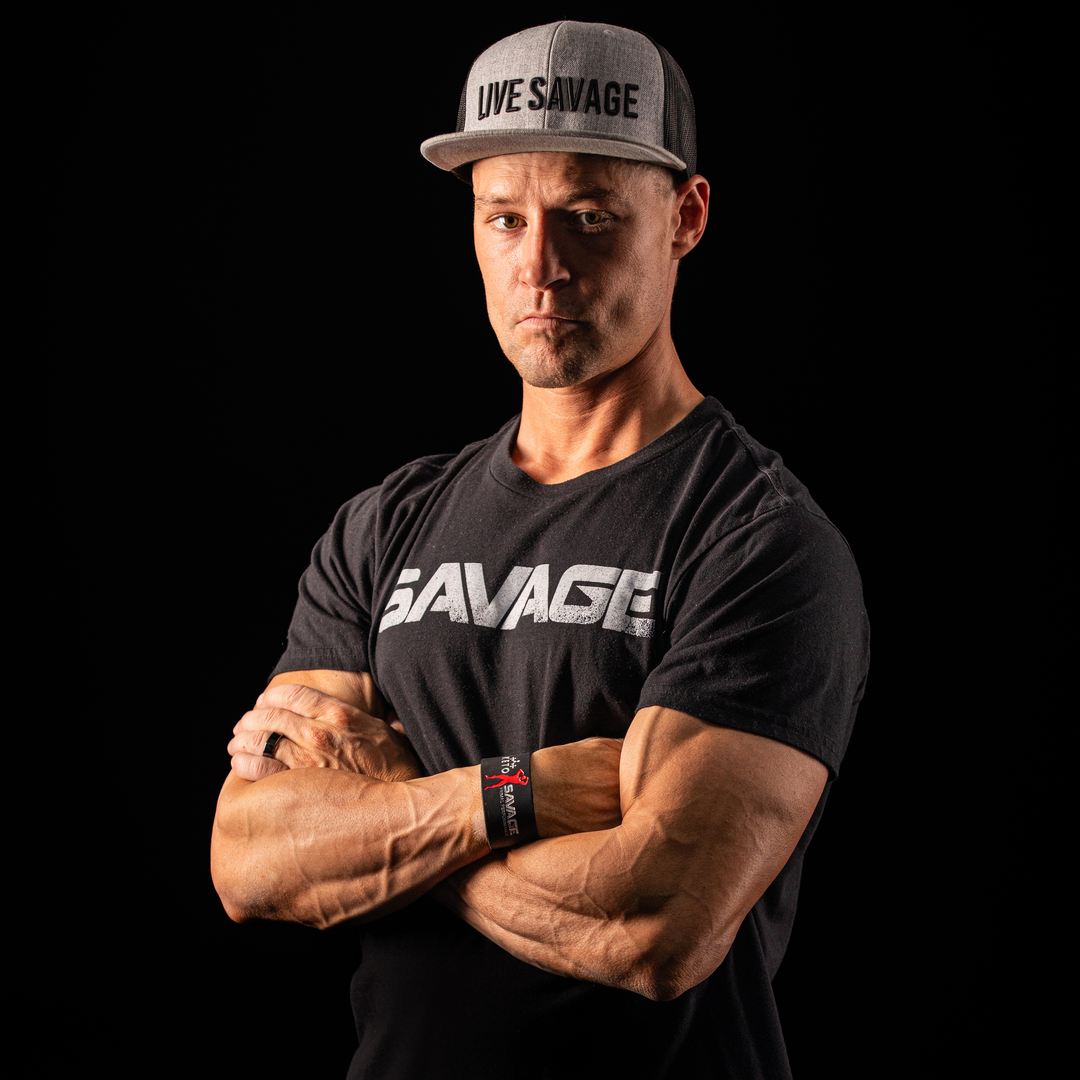
CEO, Author, WNBF Pro
Robert Orion Sikes is a lifetime natural, competitive bodybuilder. In the beginning, he followed traditional, “bro-dieting” wisdom, which consisted of eating 6 or 7 meals a day filled with carbohydrates and very high protein. This nutritional protocol led to a downward spiral of health issues and disordered eating.
Robert decided to try something new and began experimenting with a high-fat, strict ketogenic approach to bodybuilding back in 2014. Since then, he formulated his own approach to contest prep nutrition, leveraging keto, and earned his pro-status with bodybuilding and became the leanest man in the world in 2023.
He has since dedicated his life to learning and teaching others the benefits of following a well-formulated, ketogenic lifestyle. The lessons learned led to his creation of the Keto Brick, a 1,000-calorie, ketogenic performance meal designed to offer quality nutrition with convenience. He and his team produce the Bricks in-house to oversee complete quality control. In an effort to offer his knowledge at scale and help as many people as possible, Robert developed his “Savage System,” which organizes all of his methodology into a guided program that anyone can leverage, whether they plan to compete or simply achieve the best shape of their life.
Robert works alongside his wife, Crystal, and their amazing team to continually create content and Bricks and add a ton of value within this community. His mission is, and will continue to be, empowering others to believe in themselves and truly tap into their full potential by o… Read More
